
Do you belong to a church that is struggling to find enough volunteers to complete ministry tasks? Is it always the same small group of individuals who “volunteer” repeatedly, finding themselves eventually “burning out”? Are you constantly filling “round holes with square pegs”—using individuals to complete tasks that do not use their spiritual gifts?
I belonged to such a church until we created a spiritual gifts ministry that provided opportunities for congregants to discover, explore, develop, and use their unique spiritual gifts to serve in various ministries of our church. This spiritual gifts ministry shifted our church culture from one that was always asking for volunteers to one that now asks individuals to serve using their spiritual gifts.
Once our congregants discovered and explored their spiritual gifts through workshops, they were curious to learn how they could serve God through our church ministries. There was an abundance of opportunities to serve. However, shifting from asking for volunteers to inviting individuals to serve with their spiritual gifts was a process that developed over time.
We began by changing our language, intentionally eliminating the word “volunteer” from our vocabulary. Working with all the ministry leaders in our church, we prepared a Ministry Teams and Spiritual Gifts handbook, listing every ministry at our church, its purpose, a short list of opportunities to serve, a list of key spiritual gifts, and the contact information for the current ministry leader. Individuals used this document to explore which ministries use their gifts. Next, to keep the conversation and focus on spiritual gifts alive and thriving, we periodically offered Ongoing Conversations About Spiritual Gifts, workshops that explored spiritual gifts through collaborative dialogue in a fun and interactive way. We regularly encouraged congregants to intentionally talk about their spiritual gifts with others—how they are using their gifts, what they are experiencing, and where they are finding satisfaction and joy while serving with their spiritual gifts.
As congregants began to serve using their spiritual gifts, a delightful and unexpected outcome of the spiritual gifts ministry was the newly formed and deepening relationships among congregants. There was a definite shift in conversations from “Hi, How are you? I’m fine,” to actual conversations of substance and nurturing support for one another.
A spiritual gifts ministry supports and undergirds all the other ministries at a church. When congregants discover and use their spiritual gifts, other ministries are enhanced, complemented, and supported in a variety of ways. Let me explain how I have seen this happen at my church.
- Once the intake leader for Stephen Ministry knew the spiritual gifts of the Stephen Ministers, she was better able to match, through prayer, the needs of a potential care receiver to the spiritual gifts of the available Stephen Ministers.
- When the nominating committee was looking to fill key leadership positions, knowing the gifts of congregants allowed them to better identify and reach out to individuals with the necessary spiritual gifts for a particular position. In many cases, knowing the spiritual gifts of congregants guided them to approach those quiet congregants too shy to speak up, yet who were just waiting to be asked to serve.
- When the moderator of deacons needs to assign deacons to specific tasks in addition to tending to their parish members, knowing the spiritual gifts of the deacons is extremely helpful. Likewise, as deacons reach out to the congregants in their parish, they are better able to encourage participation in specific ministries of the church for those congregants who want to explore serving with their spiritual gifts.
- Huge events, such as Vacation Bible School and the Living Nativity, have so many opportunities for congregants to serve using their spiritual gifts. Many of the tasks are small and can be handled by one person, while other tasks require the collaboration of several people. Some of the tasks are out front, and many are behind the scenes. These opportunities can be the first step into service by individuals, allowing them to build their confidence to move into bigger opportunities in using their spiritual gifts.
The benefits continue to expand as individuals discover, explore, develop, and use their spiritual gifts. As spiritual gifts are used in ministries by many individuals, it is as Paul says in 1 Corinthians 12:4-7 (ESV), “Now there are varieties of gifts, but the same Spirit; and there are varieties of service, but the same Lord; and there are varieties of activities, but it is the same God who empowers them all in everyone. To each is given the manifestation of the Spirit for the common good.” The Spirit manifests gifts in us for the common good. Individuals are gifted as part of a faith community. Through community, gifts are discovered and nourished. Through community, gifts are expressed.
When I use my spiritual gifts to serve others, I experience an unspoken yet powerful satisfaction and joy. I feel an ease and grace that is present when I use my spiritual gifts as God has called me to do. I want everyone to feel the joy that comes when you serve with grace and ease through your spiritual gifts.
Do you want to shift the culture at your church from struggling for volunteers to seeing the joy of everyone serving with their spiritual gifts? Pray for God’s guidance for the next step you can take to achieve this shift—and then take that step!
Are you ready to discover your spiritual gifts? Complete the survey here!
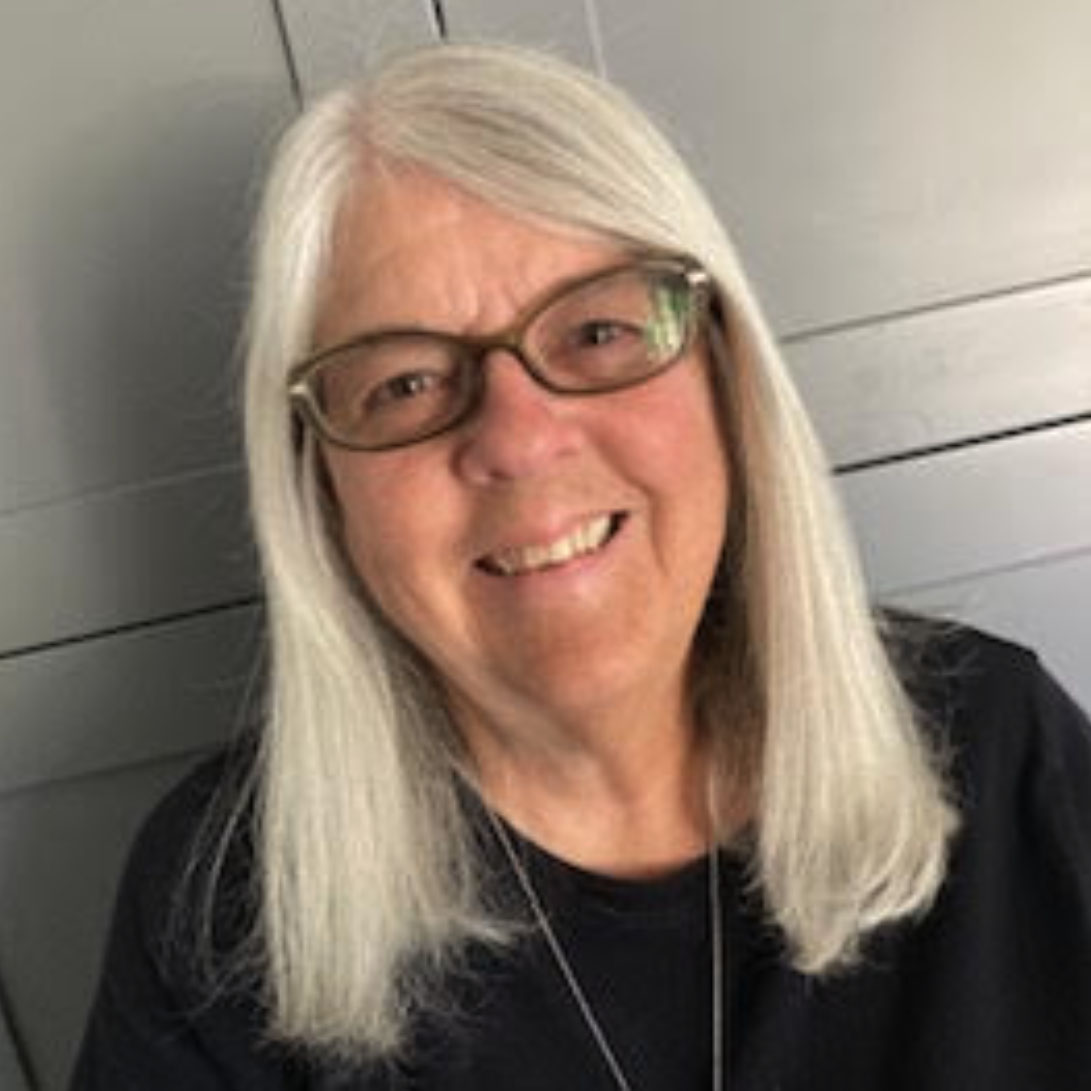
Susan Hayward has lived a rich and varied life, yet her roots remain firmly planted in her Illinois farm upbringing. She holds a Bachelor of Science from the University of Illinois and a Master of Science from the University of California, Davis, and spent nearly 20 years teaching science. Her background includes running an organic vegetable farm in California, earning professional coach training through Falling Awake Life Coaching, and achieving her PCC credential with the International Coach Federation. For two decades, she has provided pro bono coaching for One to One – Women Coaching Women and has served marginalized communities through work in Colombia, New York City, and California. Susan is active at Templeton Presbyterian Church in Templeton, CA, and enjoys gardening, sewing, puzzling, reading, and time with her eight grandchildren.