

There is a moment that many pastors describe in almost identical terms. It happens during a conversation with a longtime church member, someone who has attended faithfully for years, who reveals something significant: a struggle they have been carrying alone, a question they have never felt free to ask, a doubt that has been growing quietly beneath a consistent Sunday morning smile.
And the pastor wonders: How did I not know this? How did this person sit in our community for years and never find a safe space to say any of this? That moment is not a failure of pastoral care. It is a structural observation. And microchurch is, in part, a structural response to it.
What Size Does to Spiritual Community
Research on group dynamics has long established that genuine relational depth requires a ceiling on group size. Trust forms differently when everyone in the room is known and accountable to everyone else. In a congregation of a hundred people, the relational math becomes challenging. Most people find a social cluster and inhabit it. The broader congregation can remain a crowd of familiar faces rather than a community of known and knowing people.
Spiritual growth can and does happen in larger settings. The preached Word, corporate worship, and shared sacrament carry real formative power regardless of the size of the gathering. But the “one another” dimension of discipleship and the commands of the New Testament to love one another, bear one another’s burdens, confess to one another, and encourage one another require a level of relational proximity that a larger gathering alone rarely sustains across an entire congregation.
In a gathering of 12 to 20 people, the relational conditions shift. Everyone is visible. Everyone is missed when absent. Everyone’s life intersects with everyone else’s over time. The conditions for the kind of honest, sustained, accountable community that produces genuine spiritual formation exist naturally, not because a program was engineered to create them but because the size of the community makes them possible.
Formation Happens in Community, Not Just Content
The New Testament vision of spiritual growth is not primarily about the transfer of information. It is about transformation that happens in the context of shared life. Disciples are not formed primarily in lecture halls; they are formed in the friction and grace of genuine community. When someone in the group names something true about you that you had been avoiding. When the person you are accountable to asks the question you were hoping to skip. When the community around you refuses to let you drift into comfortable, unchallenged patterns.
That kind of formation requires relationships with enough depth and enough shared history to make honest engagement both possible and safe. Microchurch is designed to create exactly those conditions: a community small enough for real relationship, consistent enough for genuine trust, and missionally oriented enough that the formation serves a purpose beyond personal spiritual satisfaction.
Involvement as Formation
There is another dimension to what small gatherings produce that is easy to underestimate: the formative effect of having a genuine role in the mission. Human beings are shaped by what they do, not only by what they believe or hear. A disciple who is never given meaningful responsibility in mission and community is a disciple whose formation has a structural ceiling.
In a microchurch, there are no passengers. The community is small enough that every person’s presence and contribution matter. Leadership is distributed by necessity and design. Gifts are identified early and deployed regularly. People discover capacities they did not know they had, and faith grows under the weight of actual responsibility for real people in a real mission. That is not incidental to discipleship. It is central to it.
This Is What We Want for the Church
Most leaders entered ministry because they wanted to see people genuinely transformed by their encounter with the living Christ. They wanted the church to be a community where real discipleship happened, where people were known, loved, challenged, and sent. Microchurch does not guarantee all of that. But it creates the structural conditions where all of that becomes possible in a different and often more consistent way.
If you want to see what those conditions look like in practice, come to Scattered & Sent this October. Spend four days at The Garden in Muncie, Indiana. Watch what happens when the church is small enough for everyone to matter and sent enough for everyone to have a mission. You will not leave unchanged.
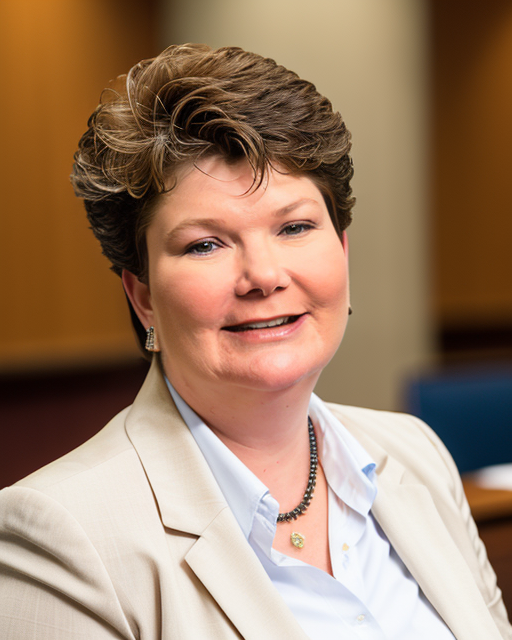
Dr. Tracee J. Swank serves as a nonprofit ministry coach, consultant, author, and speaker. With a Doctor of Ministry in Kingdom entrepreneurship, she coaches pastors, church leaders, and ministry entrepreneurs toward missional clarity, innovative strategy, and Kingdom impact. She brings over 25 years of experience guiding leaders and congregations through renewal, revitalization, and reimagined mission. Connect with her at tracee@churchdoctor.org.