
The microchurch conversation is most productive when it happens with someone who is actually doing it. The questions that surface in that kind of context tend to be more useful than the answers found in a book. But there are a few questions worth discerning on your own before you get to that room. These are the five questions I hear most often from leaders who are beginning to take the microchurch conversation seriously.
1. Is there something here for established churches, or is this only for new starts?
This is almost always the first question, and it is a fair one. A significant portion of the microchurch literature is written with new starts in mind, and established church leaders can feel like they are reading about something that can’t happen in their church.
Microchurch principles are certainly relevant for established congregations, but they present differently than they do in a new context. Many established churches are exploring microchurch networks as a missional extension of their existing congregation, sending small, equipped communities into neighborhoods and people groups the building-based church is not currently reaching. Others are in deeper conversations about what a more comprehensive transition might look like over time. Both paths are worth exploring, and both involve a learning curve that includes unlearning as well as learning.
2. What happens to pastoral leadership in this model?
In a microchurch network, pastoral leadership tends to shift from delivery to equipping. The Ephesians 4 vision of leaders who equip the people of God for works of ministry becomes the organizing principle rather than the aspirational one. The pastor’s primary work moves toward identifying and developing leaders within the communities, maintaining theological and relational coherence across the network, and multiplying capacity rather than centralizing it. For some leaders, that shift is genuinely energizing. For others, it is a significant identity adjustment that requires support and a strong coaching relationship.
3. How does this work financially?
The financial structure of a microchurch network differs meaningfully from a building-based congregation. Facility costs, program overhead, and the expense of maintaining a centralized institutional structure are generally reduced or eliminated. What requires investment: leadership development, coaching, and the relational infrastructure that holds a distributed network together with theological integrity and shared accountability. Honest microchurch leaders will tell you that the financial transition is one of the more complex aspects of the model and one that benefits significantly from the guidance of leaders who have navigated it before.
4. How do we maintain theological accountability in a decentralized model?
This is a serious and important question. Microchurch networks that lack strong theological accountability and relational connection can drift in unhealthy directions. The history of house church movements includes communities that became isolated precisely because they operated without meaningful connection to a larger body of believers. The answer is not to avoid decentralization but to be intentional about the connective tissue, the glue that holds the network together: regular gatherings of microchurch leaders, shared theological formation, clear accountability structures, and active connection to a wider denominational or movement network. Scattered & Sent is hosted in partnership with the Great Lakes Conference of the Global Methodist Church precisely because that kind of accountability and connection is not optional; it is essential.
5. Where do I see this actually working before I decide anything?
This is an excellent question, and it is exactly what Scattered & Sent: A Microchurch Immersion was designed to answer. You should see a working model before you decide anything. You should spend time with leaders who are doing it in a real context, ask the hard questions, observe the community, and let the experience inform your thinking from the inside out. That is a fundamentally different kind of learning than reading a book or sitting through a breakout session.
October 9-12, 2026. Muncie, Indiana. Come with your questions. Leave with a clearer sense of what could be next for you and your congregation.
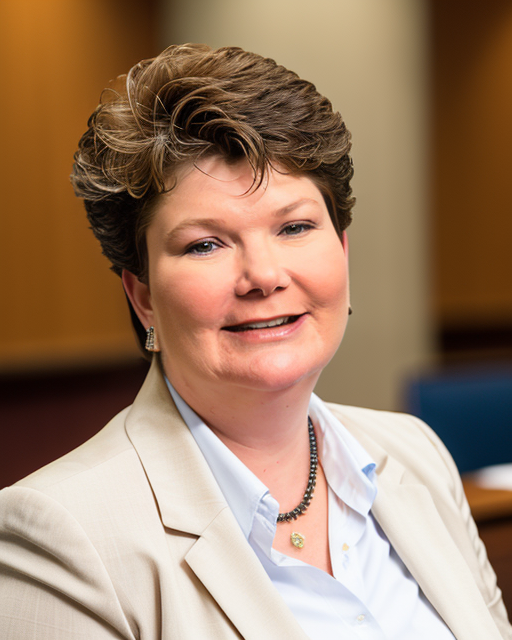
Dr. Tracee J. Swank serves as a nonprofit ministry coach, consultant, author, and speaker. With a Doctor of Ministry in Kingdom entrepreneurship, she coaches pastors, church leaders, and ministry entrepreneurs toward missional clarity, innovative strategy, and Kingdom impact. She brings over 25 years of experience guiding leaders and congregations through renewal, revitalization, and reimagined mission. Connect with her at tracee@churchdoctor.org.