
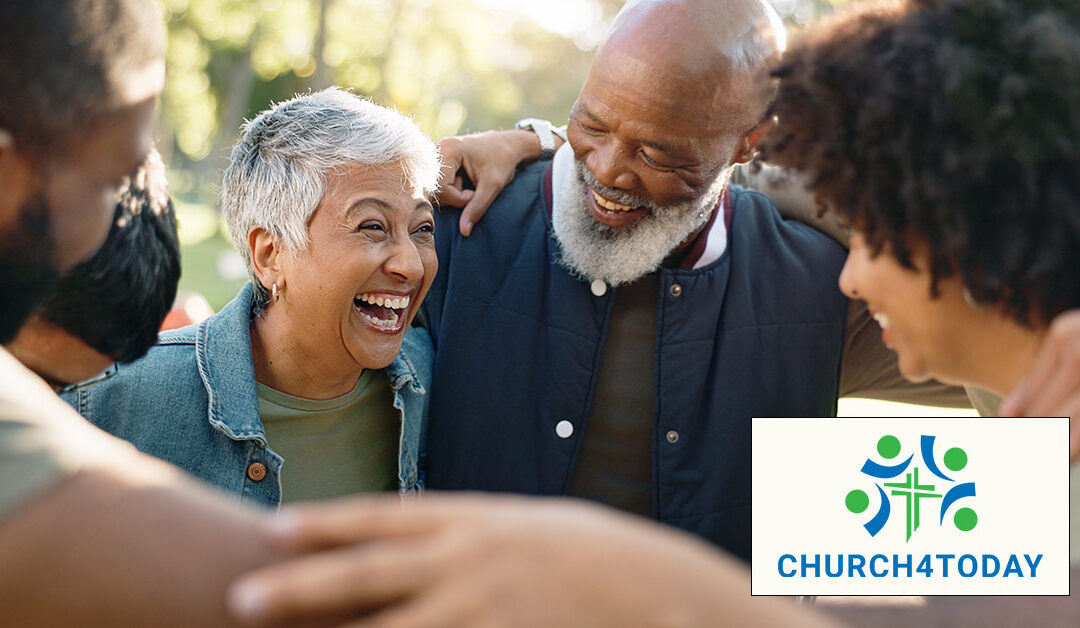
Think of the last person who actually became part of your church. Not a name on the attendance roll. Someone who got woven in. They almost certainly did not fall for a service first. They were loved by a few people who refused to let them stay strangers.
That used to be the exception. It is now the pattern, and it ought to change how you lead.
The row was the old door. The circle is the new one.
For generations, the path ran one way: Come to a service, keep coming, eventually join a group. Worship first, community later. We built whole churches on that order.
It has flipped. People are joining a group before they ever attend worship, and others stay tethered to the church through a group even when they cannot make Sunday. For a lot of people now, the first real experience of church happens in a living room or around a table, not in a sanctuary. They belong long before they believe, and they will not believe until they belong.
If you have poured your life into the weekend service, that is hard to hear. But for an established church, this is not a threat. It is the opening you have been praying for because the thing this moment requires is the thing you already have.
You are sitting on what the culture is starving for.
Most established churches miss this completely. People are desperate for a real relationship in a world that leaves them hollow, and your church has spent decades quietly building exactly that.
I have watched congregations assume their best asset was the building or the programs when the real treasure was the people who show up to every funeral with a casserole, the group that has prayed together for 20 years, and the volunteers who know every name. That is not sentiment. In this cultural moment, that is your front door, and most of you have it propped shut.
The job is not to manufacture a community you do not have. It is to stop hiding the community you do.
Make the circle the way in.
Three honest shifts.
First, quit treating groups as step two. Make a group the first thing a stranger can walk into, no Sunday attendance required, no hoops. Belonging should be the easiest thing about your church, not a reward for sticking around.
Second, give your groups a real reason to exist beyond meeting. A group becomes discipleship when people pray together, get into Scripture together, confess to each other, and carry each other’s actual lives. This is the apostolic pattern. The early church did not form disciples in rows facing forward. It formed them in homes, around tables, in the open. Ephesians 4 hands the work of ministry to the whole body, not to the one up front. Your groups are where that conviction either becomes real or stays a slogan.
Third, widen where a circle can happen. Belonging is not confined to a church building on a Tuesday night. It happens in coffee shops, online, over shared meals, in the ordinary back-and-forth of life. Go where people already are instead of demanding they come find you on your terms.
The church worth building toward
Picture a church where nobody falls through the cracks because everybody has a circle. Where the person who is nowhere near ready for a pew already has a seat at a table. Where your relational depth is not a buried treasure but the loudest thing about you.
That church does not lose its history. It finally puts it to work for the mission.
Church4Today helps established churches take that relational depth and aim it outward, turning belonging into the way in and discipleship into where it leads. Find out how entrepreneurial, sent thinking can make the community you already have the door people are looking for: https://church4today.com/get-started/
Your challenge this week: Find the one group in your church that is genuinely good at folding people in. Ask its leader what makes it work. Then ask what it would take to send your next newcomer there first, before you ever invite them to a service.
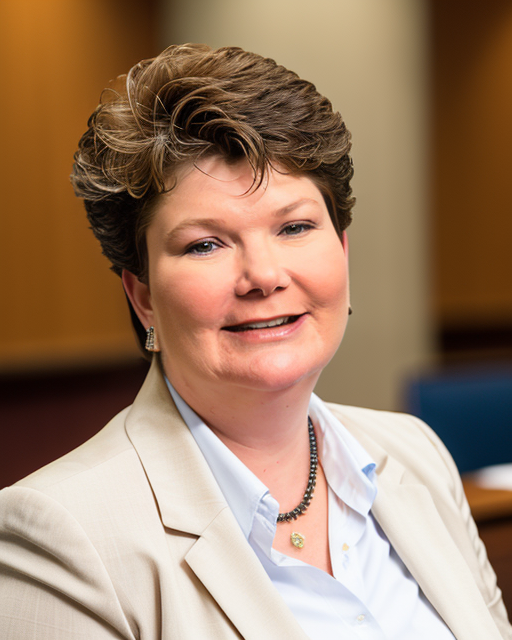
Dr. Tracee J. Swank serves as a nonprofit ministry coach, consultant, author, and speaker. With a Doctor of Ministry in Kingdom entrepreneurship, she coaches pastors, church leaders, and ministry entrepreneurs toward missional clarity, innovative strategy, and Kingdom impact. She brings over 25 years of experience guiding leaders and congregations through renewal, revitalization, and reimagined mission. Connect with her at tracee@churchdoctor.org.